Establishing a powerful brand is pivotal for the early success of your startup. Building a strong brand ensures differentiation and recognition, trust and credibility, customer loyalty, market distinction, and talent attraction.
This explainer provides references on branding, design, and storytelling. From visual identity tools to narrative crafting, we hope references shared can be leveraged to build a strong visual identity and distinct brand guidelines.
Building a visual identity
Good branding begins with a clear idea on what your company stands for, visually and otherwise. When building a visual identity, have an idea of the direction of your company (what you want to test/display to engage key audiences), as well as what sets you apart from your competition.
While many businesses, and advertising agencies, often delve into brand archetypes (example below), and similar ideas as a first step of what your company stands for.
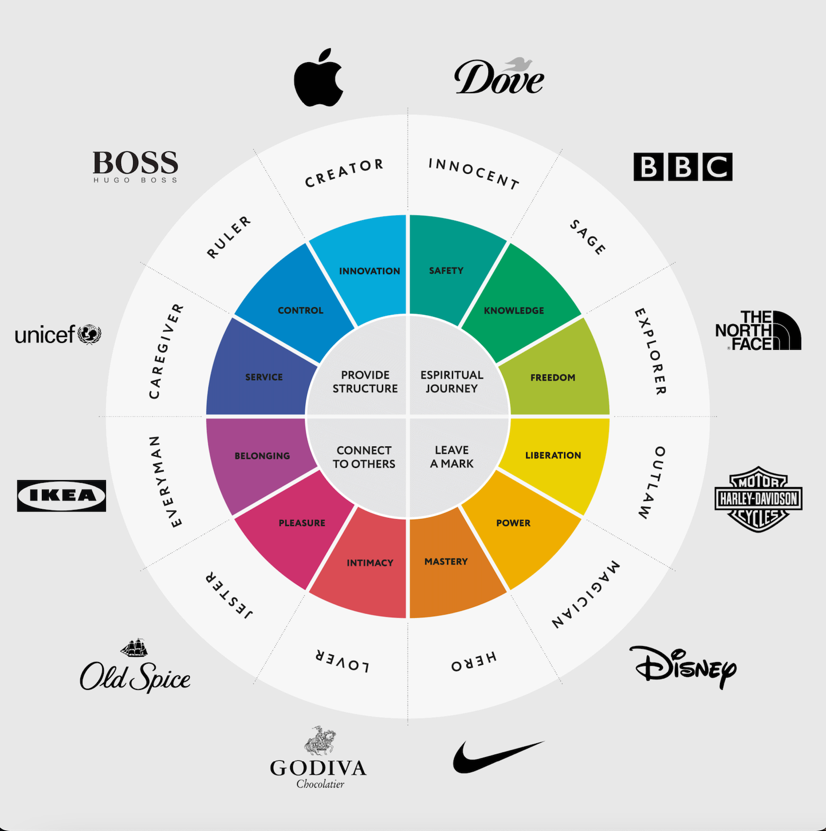
When thinking about a visual identity, it’s also useful to draw from public-facing successful demonstrations of this. A few useful references to explore successfully delivered visual identity include:
For additional design and inspiration, consider platforms like Behance.
Building a brand guideline
Brand guidelines should be known, introduced and upkept by every organisation to ensure the external perception (marketing) of your brand is consistent. Using Folklore’s brand guidelines as a starting point (as only an excerpt has been shared), when creating a style guide for your brand, it’s important to consider the following aspects:
Crafting your tone of voice
Your startup's story is as vital as its visuals. When looking at what you say and how you say it externally, it's important to build resources that can be referenced by the whole team. This includes resources like a tone of voice document, brand on a page, company boiler plate (short, concise company overview that illustrates your ‘why’ and impact), and provide training, as needed, for how team members speak about your brand externally.
When looking at additional inspiration for strong brand identity and other relevant resources, a few other places to look include:
For personalised guidance and further assistance, feel free to reach out to our Folks.
This resource, and any guidance within it, must not be relied on as legal advice. We recommend that you seek specific advice to deliver an outcome best suited to your situation.
Establishing a powerful brand is pivotal for the early success of your startup. Building a strong brand ensures differentiation and recognition, trust and credibility, customer loyalty, market distinction, and talent attraction.
This explainer provides references on branding, design, and storytelling. From visual identity tools to narrative crafting, we hope references shared can be leveraged to build a strong visual identity and distinct brand guidelines.
Building a visual identity
Good branding begins with a clear idea on what your company stands for, visually and otherwise. When building a visual identity, have an idea of the direction of your company (what you want to test/display to engage key audiences), as well as what sets you apart from your competition.
While many businesses, and advertising agencies, often delve into brand archetypes (example below), and similar ideas as a first step of what your company stands for.
When thinking about a visual identity, it’s also useful to draw from public-facing successful demonstrations of this. A few useful references to explore successfully delivered visual identity include:
For additional design and inspiration, consider platforms like Behance.
Building a brand guideline
Brand guidelines should be known, introduced and upkept by every organisation to ensure the external perception (marketing) of your brand is consistent. Using Folklore’s brand guidelines as a starting point (as only an excerpt has been shared), when creating a style guide for your brand, it’s important to consider the following aspects:
Crafting your tone of voice
Your startup's story is as vital as its visuals. When looking at what you say and how you say it externally, it's important to build resources that can be referenced by the whole team. This includes resources like a tone of voice document, brand on a page, company boiler plate (short, concise company overview that illustrates your ‘why’ and impact), and provide training, as needed, for how team members speak about your brand externally.
When looking at additional inspiration for strong brand identity and other relevant resources, a few other places to look include:
For personalised guidance and further assistance, feel free to reach out to our Folks.
This resource, and any guidance within it, must not be relied on as legal advice. We recommend that you seek specific advice to deliver an outcome best suited to your situation.


%20(1).jpg)